Monday, 21 November 2011
Kilvey Hill 19-11-11
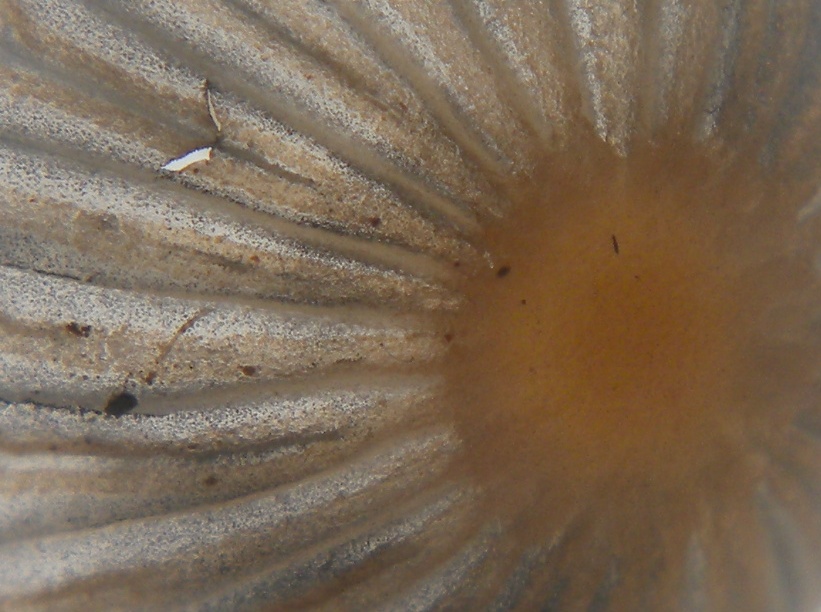
It's been almost a month since I went up Kilvey Hill and did a full search, going to parts of the hill that I've never ventured too before which bore some surprising finds. On the way to the hill I came across Mycena vitilis/Snapping Bonnet (above) and Tricholoma fulvum/Birch Knight, (below). This Knight has a very long stipe that goes deep into the soil.
Also on the way were two more Tricholomas, T.focale and Tricholoma scalpturatum/Yellowing Knight, the photo below is of Tricholoma scalpturatum. It fruits in the same place every year at the bottom of Kilvey Road but this year in numbers I couldn't count.
Below is a Cortinarius but there are so many in this family (at least 600) that identification is near impossible.
Another Knight, this time Tricholoma equestre/Yellow Knight. It's a regularly fruiting fungi here and stands out a mile since it's one of only two yellow Knights.
And another Knight this one is Tricholoma focale.
Along one path was Peziza badia/Bay Cup,. This was the first time that I've ever seen it in such numbers. This year for some reason there seems to have been a glut of particular species. What struck me about these was their size. They were particularly large.
On a path that I have never taken before I came across an area of land where the trees were less dense and the ground covered in moss, amongst the moss was this very small Mycena..at least that's what I think it is at the moment.
On the Port Tennant side of Kilvey Hill there are places where wood chip has been left under the trees. Tree bark mulch is favorable to many species of fungi and here, covering many square feet were a variety of 'woodchip' fungi. Below is Hypholoma marginatum/Snakeskin brownie. In the front is Pluteus cervinus/Deer Shield.
On the way down and home I also came across Collybia butyracea/Butter cap, here in a fairy ring.
And finally Amanita muscaria/Fly agaric. It's worth saying here that where I found this was severly damaged by fire earlier in the year and I feard that this mushroom would suffer as a result but not so. In fact there were many out and curiously all found on the Port Tennant side of the hill.
Lake Pluck 21-11-11
At Lake Pluck, the fungi season has been rich with species and like last year, fruiting in tremendous amounts. The greatest number today were Collybia butyracea/Butter Cap, This is a variable species when one looks at the cap but the surface does feel like butter when dry so it's always worth a gentle touch. The photo of the fairy ring below is this species. The ring itself was about ten foot in diameter and there were quite a few of them. Below is Piptoporus betulinus/Birch Bracket
Below is Lepista Nuda/Wood Blewit. This year I have found a number of this mushroom, quite large ones too.
I'll have to look this mushroom up though it's an Agaricus. The dark red discolouration should be helpful in identification.
The most interesting find today is shown below. It's a Jelly Tongue; Pseudohydnum gelatinosum. I'll try and get some better photos later.
Above is a photo of the Blushing Bracket/Daedaleopsis confragosa. There was quite a lot of this maroon coloured bracket about.
Below are two photos of Clitocybe nebularis /Clouded Funnel. I could not photograph the length this species was growing. The second photo hints at its length, which was roughly twelve foot but there was another arc that was easily over twenty five feet. The brambles and trees prevented me from finding the end.
It's never fails to surprise me what ends up in the woods. A load of staplers and staples and next to it, the screws and things needed to fix a sink to a wall.
Below is a lichen, Cladonia floerkeana, the red parts are the spore producing bodies.
Finally, two brackets which I'll have a look at later as I can't identify them off the top of my head but hopefully the blue tint to the pores will be helpful.
Lake Pluck 21-11-11
Collybia butyraceaRussula ochroleuca
Suillus luteus
Clitocybe nebualris
Lepista Nuda
Daedaleopsis confragosa
Pseudohydnum gelatinosum
Sunday, 26 June 2011
Whiterock . 03-06-2011
Wandering around white rock I found Paxillus involutus/Brown Rollrim for the first time this year. Also in a scrubby patch of grass was Agaricus campestris/Field Mushroom. I've never seen that in this location before. Since I first saw it it has been fruiting regularly over the last three weeks but not in great numbers. However it's good to see this area has been colonised.
Grassland by East Bank Way 30-5-11
On the 30th of May, after there had been showers following days of good weather, I found a few mushrooms that are often found in the soil this time of year. Especially after a downpour. The photos above and below are of Panaeolina foenisecii. As can be seen, the caps and stems are dark reddish brown, this is because they are wet. When they dry, they will be creamy beige.
Also hidden the grass was Parasola plicatilis/ Pleated Inkcap, the photos below show show delicate this particular species is.
Growing in the same place as last year was Marasmius rotula/Collared Parachute. This mushroom is easy to identify by it's pleated cap and unusual stipe attachment to the stem. (See below),
Unknown Mushroom
On the 26th of May I found a large honey coloured mushroom growing in wood chip and bark mulch on Quay Parade Road, by Sainsbury's. (SS 66030 93108).
It was in considerable numbers and fruiting in many stages of maturation. It completely puzzled me as I found it impossible to work out the family it belongs too. I believe it to be an Agrocybe, specifically Agrocybe putaminum, which is not indigenous.
Since then the weather has been either dry or very wet and this fungi has continuously fruited for the last month..Another wood chip fungi that is fruiting in the same location is Psilocybe cyanascens.
Thursday, 26 May 2011
Panaeolus foenisecii/The Lawn Mower's Mushroom
On the east side of Swansea, two bridges connect St Thomas and Port Tennant to the city centre. Between these bridges there's an area of grass where I've found a number of fungi including Melanoleuca, Hygrocybe, Clitocybe, Marasmius and Stropharia.
It's also home to Panaeolus foenisecii; commonly called 'The Lawn Mower's Mushroom' since it has a habit of appearing after lawns have been recently cut back and sure enough, after the council had mown the area these arrived about four days later and after some very heavy showers over the preceding days.
One of the most useful distinguishing features of this mushroom is that it's hygrophanus, which means its cap changes colour if it's wet or dry. When the cap is wet it is a dark brown sometimes with flushes of cinnamon and dries to a much light umber/buff colour. The darker patches below show the drying stage with colour change occurring.
The gills are brown and mottled and that mottling is a characteristic of the mushroom.
This mushroom contains a toxin called psilocybin which is a hallucinogenic drug to humans. In this species the toxin occurs in tiny, tiny amounts and does not even occur in every fruitbody but could be dangerous to toddlers.
It's also home to Panaeolus foenisecii; commonly called 'The Lawn Mower's Mushroom' since it has a habit of appearing after lawns have been recently cut back and sure enough, after the council had mown the area these arrived about four days later and after some very heavy showers over the preceding days.
One of the most useful distinguishing features of this mushroom is that it's hygrophanus, which means its cap changes colour if it's wet or dry. When the cap is wet it is a dark brown sometimes with flushes of cinnamon and dries to a much light umber/buff colour. The darker patches below show the drying stage with colour change occurring.
The gills are brown and mottled and that mottling is a characteristic of the mushroom.
This mushroom contains a toxin called psilocybin which is a hallucinogenic drug to humans. In this species the toxin occurs in tiny, tiny amounts and does not even occur in every fruitbody but could be dangerous to toddlers.
Subscribe to:
Comments (Atom)