Pages

Wednesday, 8 September 2010

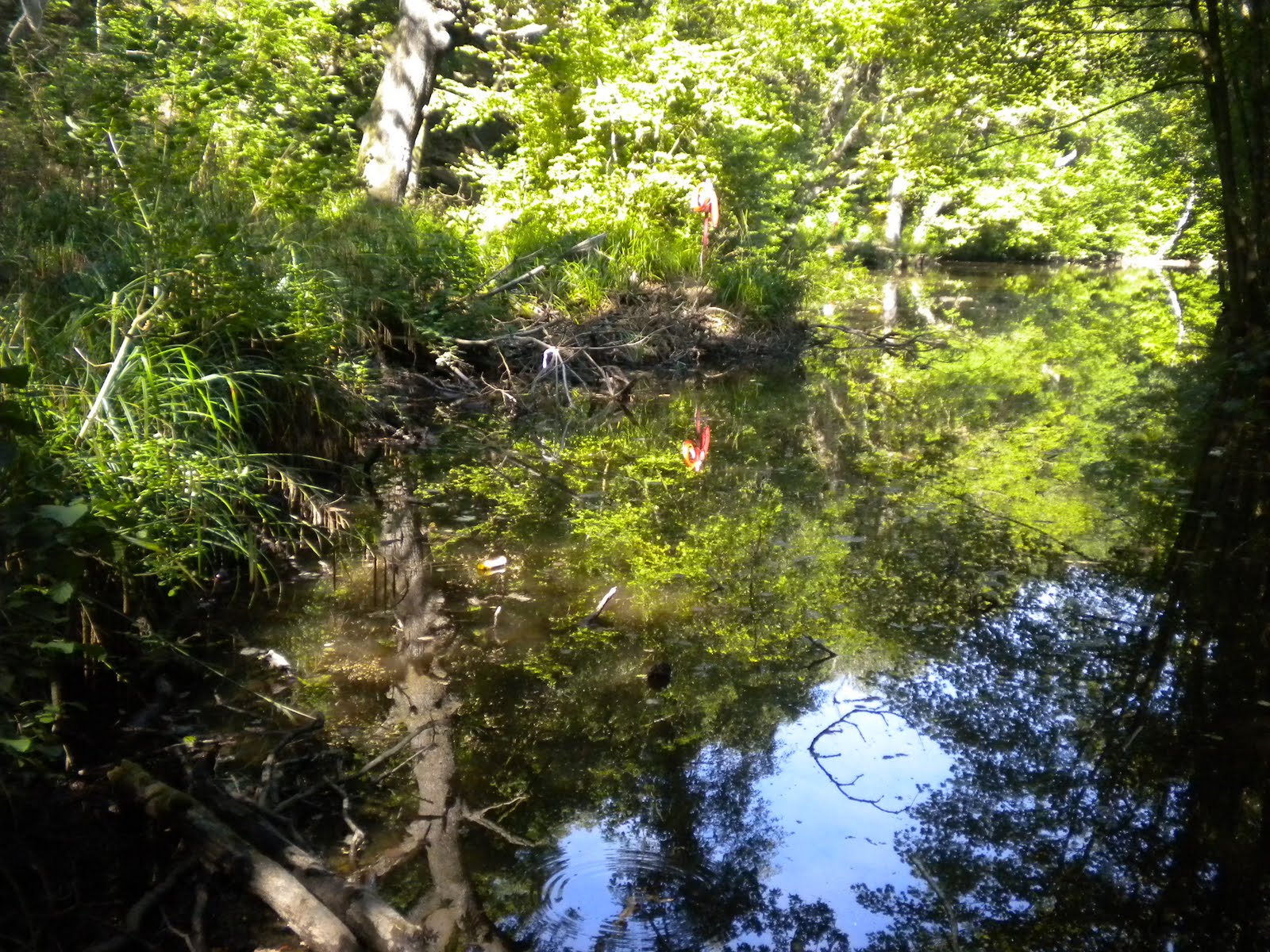
Walk to Pluck Lake

I went for a foray down Pluck Lake today, taking the pathway that runs next to Pentre-chwyth Rd then alongside the A4217 then, crossing over the road into a disused railway track which on the left will lead into the area around Pluck Lake, opposite Morrisons.
The map below shows my route...


It's never been the most exciting of places and previously has returned virtually next to nothing in mushrooms. I have found some of course but never a great deal.

This year everything has changed and since the 12th of August I've found more mushrooms here than anywhere else, certainly more than on Kilvey Hill; not just in the variety of species but in quantities.
A few weeks ago Amanita rubescens carpeted the Pluck wood in numbers I'd never seen there before; in fact I can't remember even seeing that mushroom there before. Most of those have gone now and Russula Ochroleuca have replaced them in similar numbers.

Yet it's not just at the Pluck that I find a wide variety of fungi today but on route there. There's a path that runs alongside the A4217. It's only used by the odd person, except on match days when football or rugby supporters use it as a route to the stadium. On one side is the main road on the other, a recent housing development and it's here on the banks that what I find leave my collection boxes virtually full.

Finding Lactarius.
Before I reach the beginning of the pathway I have already found some Lactarius. L pubescens which has been here a while but another, with orange gills has only just started fruiting. Also here is Sullius leteus, in the same place as last year, Paxillus involutus, still producing mushrooms but less Russula than before.

I don't know which Lactarius this is at first examination. (below).


Below is another Lactarius that has been attcked by another fungi, one that attacks Lactarius and Russula and fuses the gills together covering the gills and stem in a finely pimpled mould. (see below). It's called Hypomyces tulasneanus.

Finds on a Pathway.
The start of the path is by a roundabout that is the start/end of the A4127. Crossing the road here is a bit hair raising to put it mildly as the motorists don't care, so it's easier to pass underneath the bridge near by.

There's not much to start with but the banks on the left hand side are full of mushrooms. The other side is a bit overgrown at the moment. The banks here are predominately birch.
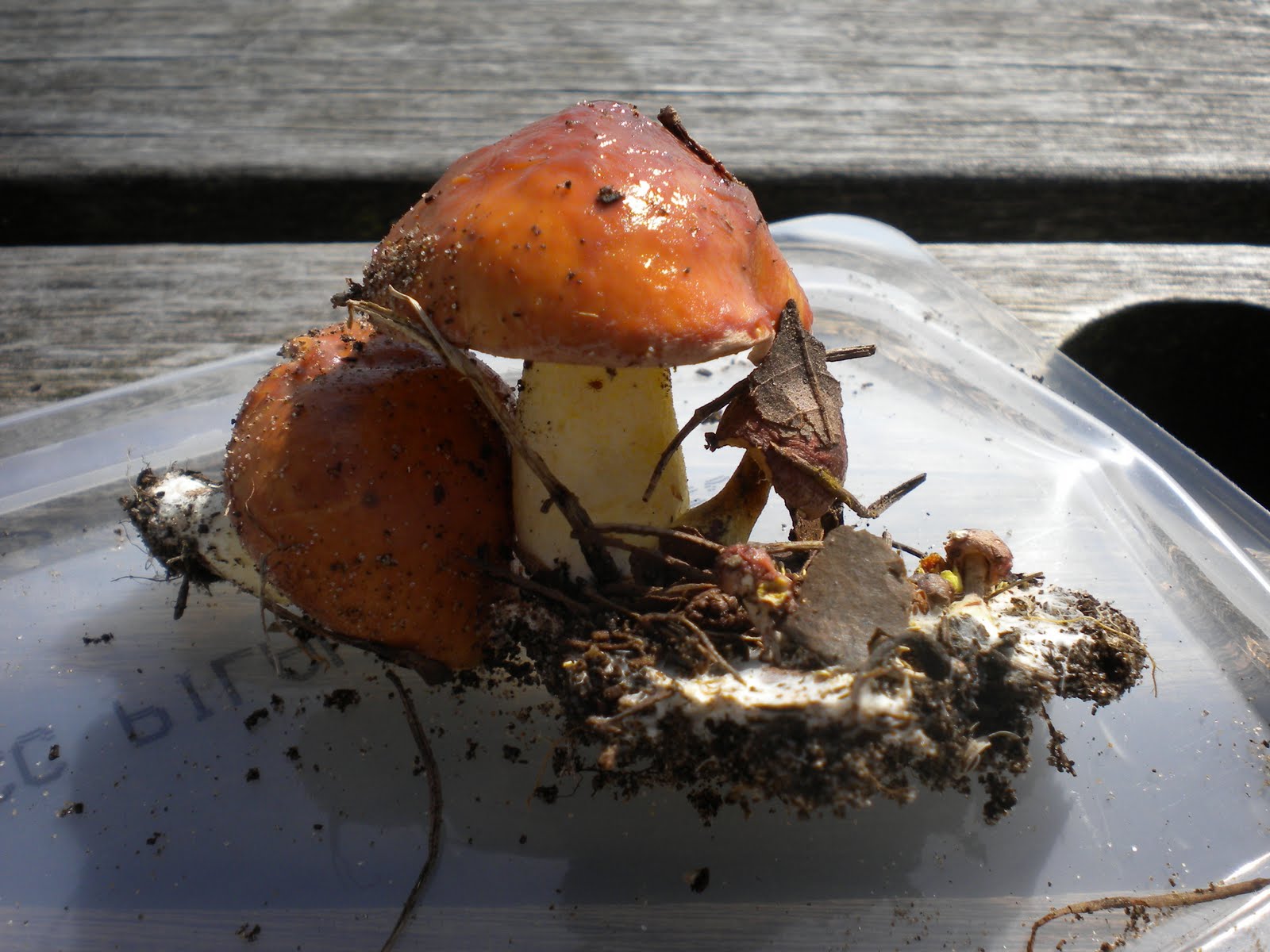
Below is a Leccinum scabrum/Birch Bolete. This particular specimen interested me because of the shape of the cap. As the mushroom has matured, the cap seems to have become taut, pushing out the spore tubes, probably to expel the greatest amount of spores possible.

Near by was a few other mushrooms, below was another Lactarius, Lactarius torminosus/Woolly Milkcap. It's quite easy to identify. It has a very woolly edge to the cap and a tomato like colour. the milk in the gills is white.
Below the woolly cap edge more clearly seen.

Lactarius pubescens on the left and Lactarius torminosus. Both of these species have the distinguishable hairy features.
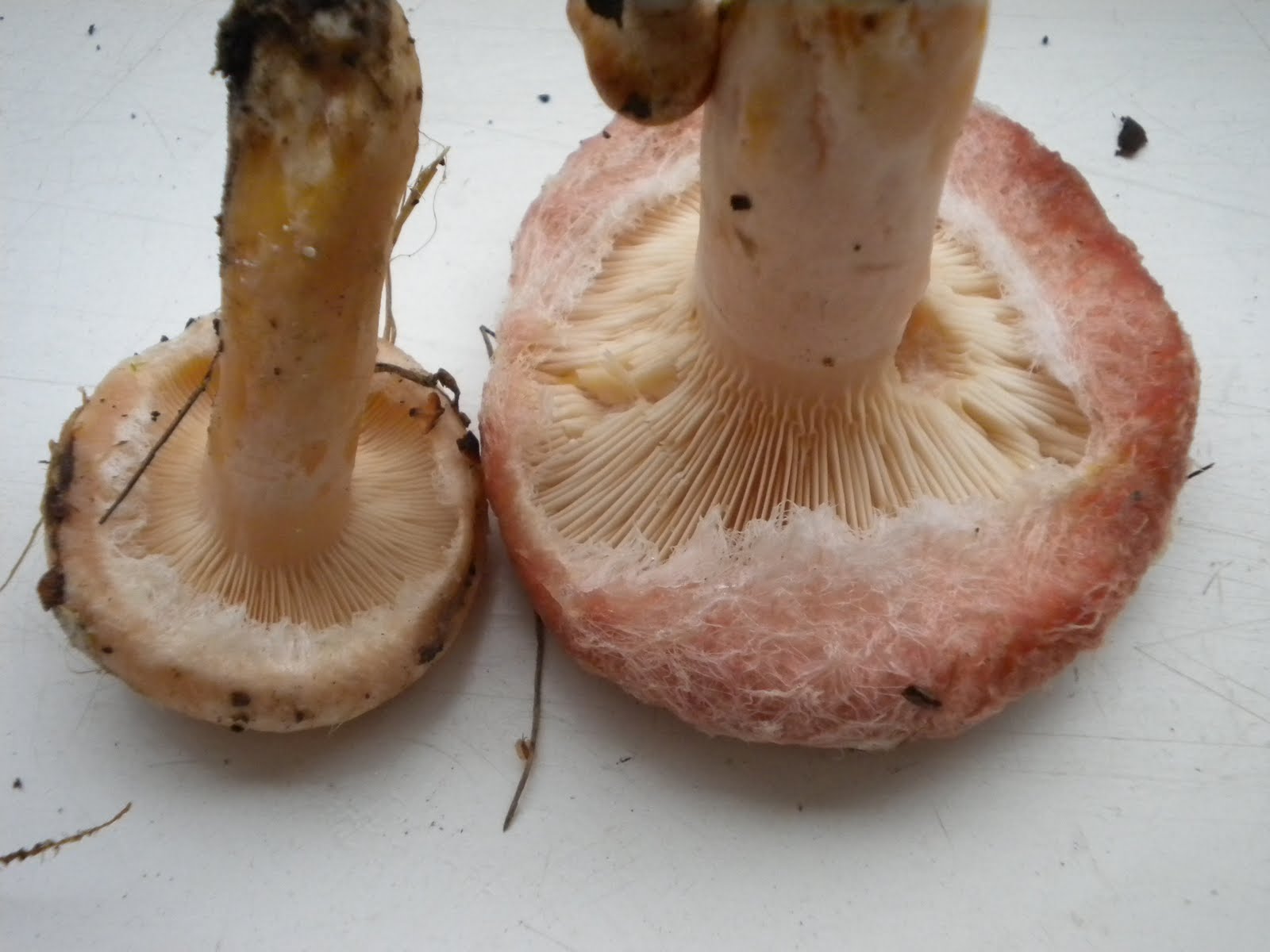

It wasn't the only milkcap here, close by was another but one I couldn't identify, in fact I didn't even know it was a Lactarius. But the milk that exuded from its gills when later cut gave it away. (See photos below). One of the peculiar things about the milk is the colour. At first it was white, abundant and slightly thick and when it dried, turned grey and solidified.


Below the milk can clearly be seen when fresh and dried. After searching through books and cross referencing I'm convinced its Lactarius vietus/Grey Milkcap. It's not just the distinctive milk however. If you take a look at the stipe, one can that there is a lighter ring at the apex, below the gills. Even though the cap colour is far from grey, it can be variable.


There was also a couple of brackets and a parachute mushroom. Trametes hirsuta. This specimin was very small but the hairy top can be seen in this photo. (below)

Marasmius ramealis/Twig Parachute


Daedaleopsis confragosa/Blushing Bracket, living on a dead branch.

The photo below shows the underneath and it's white but handing the gills and age makes it change colour as can be seen in the photo .


Further along was Mycena Pura/Lilac Bonnet. Possibly the easiest of the Bonnet family to identify...


and also Tremella mesenterica/Yellow Brain living on dead hawthorn.

I also found a Tricholoma. It's grey with a slight yellow tint and turned out to be Tricholoma scalpturatum (=T. argyraceum). See below. The mushroom starts to tinge yellow with age and a little of that can be seen in the photos.

An Inocybe too. I'm not which but I think it's Inocybe sindonia but I find this species exceptionally difficult to identify. It's virtually headache inducing.


The other things I found living here were Laccaria Laccata/The Deceiver and a Russula that I couldn't identify.

Bottom of Pentre-chwyth Road
  • Lactarius pubescens/Bearded Milkcap
  • Lactarius (unidentified as of yet)
  • Paxillus involutus/Brown Rollrim
  • Russula betularum/Birch Brittlegill
  • Hypomyces tulasneanus (on Lactarius)

Pathway Starting from Roundabout/A4127 to Brunel Way
  • Lactarius torminosus/Woolly Milkcap
  • Lactarius vietus /Grey Milkcap
  • Mycena pura/Lilac Bonnet
  • Daedaleopsis confragosa/Blushing Bracket
  • Russula (unidentified as yet)
  • Leccinum scabrum/Birch Bolete
  • Laccaria laccata/Deciever
  • Tremella mesenterica/Yellow Brain
  • Tricholoma scalpturatum/Yellowing Knight
  • Trametes hirsuta/Hairy Bracket
  • Inocybe (unidentified)
  • Marasmius ramealis/Twig parachute

Pluck Lake
  • Sullius leteus/Slippery Jack
  • Sullius grevillei/Larch Bolete
  • Tricholomoposis rutilans/Plums & Custard
  • Amanita muscaria/Fly Agaric
  • Amanita rubescens/The Blusher
  • Postia stiptica/Bitter Bracket
  • Polyporus leptocephalus/Blackfoot Polypore
  • Hypholoma fasciculare/Sulphur Tuft
  • Hygrophoropsis aurantiaca/False Chanterelle
  • Cortinarius (Unidentified)
  • Russula ochroleuca/Ochre Brittlegill
  • Lycoperdon pratense/Meadow Puffball (=Vascellum pratense)
Foxhole area
  • Rhytisma acerinum/Tar-spot fungi
  • Boletus pulverulentus/Inkstain Bolete
  • Parasola plicatilis/Pleated Inkcap
  • + 1 unidentified crust

Sunday, 5 September 2010

Waterfront Museum

I found a selection of mushrooms at the Waterfront Museum in the week all around one birch tree, including Russula.

Below are the finds. The top row is L-R: Leccinum scabrum, Lactarius pubescens and Paxillus involutus. The bottom row is, L-R: Unknown, Russula betularum, Russula puellaris, Incocybe and Melanoleuca.

The Melanoleuca was found in the new SA1 development on grass a bit further on and not with the rest.
At first I thought I had one type of Russula but it turned out to be two. Just looking at the basic characteristics in cap and stipe showed they were different.
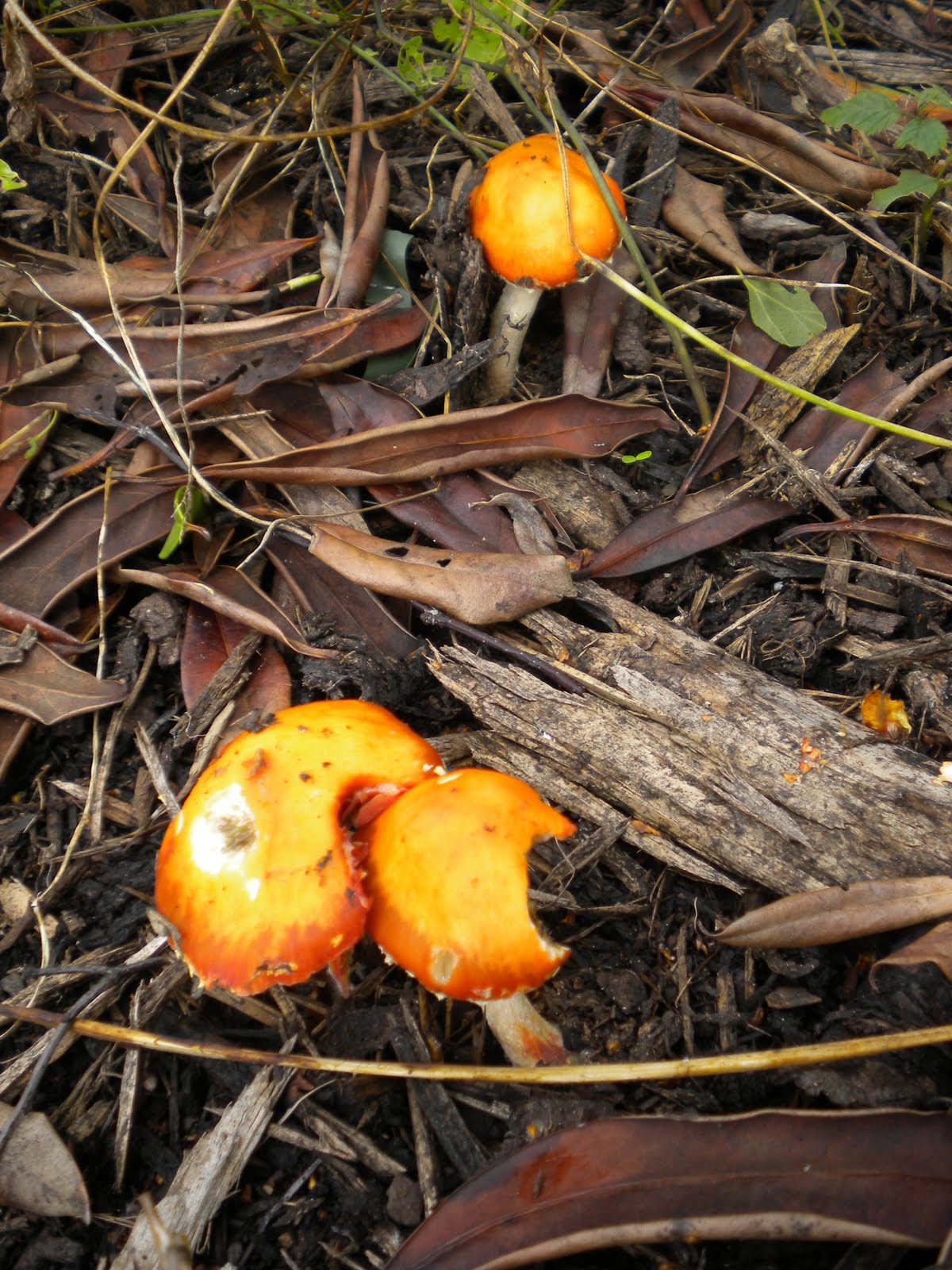

The most noticeable difference is the gills, (see below). The Russula on the left has off white and crowded gills. The Russula on the right has crowded gills too but far less so than its neighbour. The colour is the other signifier. The gills are a yellow colour. In the other photo the stipe has the same yellow colour and the edge of the cap shows a deep furrowing emphasising the gills beneath. The yellowing of the gills and stipe comes with age.
I've concluded that this is possibly Russula puellaris/Yellowing Brittlegill.

The cap colour is different too. The cap in Russula puellaris has a characteristic furrow seen along the cap edge. The cap colour has a red wine, reddish shade of brown colour that's also darker in the centre. The cap is also depressed at the centre which is common in this mushroom. It loses colour in patches.

The Russula on the left is Russula betularum/Birch Brittlegill. It's the only really pink Russula and like lots of Russula, loses it's colour easily. The cracking on the cap is probably due to the dry weather but there is still a tint of pink left. Quite often the colour is completley lost not just in this Russula but most Russula which makes identification hard at times.


As for the unknown mushroom and the Inocybe, I have no idea. Inocybe are impossible to identify without a microscope I think. as for the other, I'll keep looking.

Waterfront Museum 02-09-10
Leccinum scabrum
Lactarius pubescens
Paxillus involutus
Russula betularum
Russula puellaris
Inocybe ?
and later
Melanoleuca cognata

Thursday, 2 September 2010

Clyne Woods

Went for a foray at Clyne woods today in the hope that I would find a great deal. After looking around my local area, which is mostly birch and pine trees, going to a wood that's predominately oak and beech makes a nice change. However I found virtually nothing. The weather has been very warm and dry recently and this is reflected in the leaf litter being dry as a bone. It's not often I pray for rain, especially in a place known for it's downpours.
There was the odd thing here and there and loads of earthballs but by the time I left I had three mushrooms, one of which was an earthball. I was a little disappointed.

Below is Coprinus atramentaria/Common Inkcap

The 'boot laces' of an Armillaria or a honey fungus.

Hypholoma fasciculare/Sulphur Tuft

When the weather changes this month I'll go back. At least the trip was useful for me to get my bearings because the area is huge and I don't think I would have to go far before I find something. Fingers crossed.

A New Find.
I walk home along Oystermouth road keeping to the edges of the tree line whilst cyclists zip by in the fast lane and it's along this tree line that I find one thing that I've never seen or found before which makes up for the meagre offerings from Clyne.
It's a Suillus granulatus/Weeping Bolete. When I picked it up I was astonished to see liquid oozing from its pores. A quality that made identification relativley easy. The apex of the stipe is covered in fine granules. The cap is moist and sticky.


A Pleasant Surprise.
I stop off to grab a few things from the supermarket and since the Waterfront Museum is on the way home, I decide to have a look. I don't expect to find anything but instead find quite a lot. The large grassy area in front of the museum has had birches planted in the front, by the pavement and at the very first birch I find Leccinum scabrum, Lactarius pubescens, Paxillus involutus, an unknown Russula and a tiny Inocybe, all within a metre and a half radius of the tree. I found Lepiota here too a couple of weeks back, (see below).
Considering that the museum opened in 2005, the fact that fungi have already colonised this area is quite satisfying.
I'm sure I must have looked a bit strange plucking things from the grass, my shopping falling everywhere.


Photos from Kilvey Foray

Here are some of the fungi I took home to photograph and identify. Below is the Pluteus cervinus/Deer Shield. It's gills are white to begin with but turn pinkish as the mushroom matures. This specimen was half open when I collected it and it expanded overnight, the gills changing colour in the process.


Amanita rubescens/the Blusher

Suillus grevillei/larch Bolete

Melanoleuca cognata/Spring Cavalier

These final three mushrooms are the ones I couldn't identify at the time but will work them out..i hope.


Wednesday, 1 September 2010

6 Mushrooms/ 22nd of August 2010

Morning Walk.
On the 22nd of August I went for a quick wander to see if I could find anything within fifteen minutes walk. By the time I came home I had three mushrooms but special ones, at least to me.
There's a path very close to where I live but one I seldom visit and there shining out was, no pun intended; an earthstar, one of the strangest mushrooms.

The sac on top is filled with spores and when a drop of water or any thing that touches the elastic like sac, with the lightest of force releases spores through a tiny opening at the top. It has a bowl or collar underneath the spore sac. The legs that lift it up are called 'rays'. This particular mushroom is Geastrum triplex/Collared Earthstar.
I pick this one and put in my collection box. As I walk further down the road I can hear it bump about and needless to say when I open the lid the inside is covered in spores.

Further down the path I find (for the first time this year) Amanita muscaria/Fly Agaric. It's growing the same place as two years ago. I didn't see it last year. I've always been fond of this mushroom. These are very large, growing in a bank covered by bracken and next to birch. The largest was about 20 cms wide and some had lost all their warts and a lot of colour.

At the bottom of the path was this Tricholoma. Possibly Tricholoma columbetta. Along with some Birch Boletes.

Afternoon Walk.
Later on down foxhole there are still Boletus pulverulentus/Inkstain Bolete which are about in great numbers. Dozens of them. The dark blue occurs when it's cut or bruised in anyway, (See below).

Alongside the road that runs by Sainsburys are Scleroderma citrinum/Common Earthball in large numbers. I've seen a great deal of Earthballs of all kinds, all over Swansea this year.

Also at Sainsburys, growing in the bark mulch is Leratiomyces ceres/Redlead Roundhead. This is also known as Stropharia aurantiaca.


Swansea Foxhole path/Sainburys 22-8-10
Geastrum triplex/Collared Earthstar.
Tricholoma columbetta
Amanita muscaria/Fly Agaric.
Boletus pulverulentus/Inkstain Bolete
Scleroderma citrinum/Common Earthball
Leratiomyces ceres/Redlead Roundhead. (Stropharia aurantiaca).

Second Kilvey Foray

I decide to do a longer foray from Port Tennant side up to the transmitters then back down to Pentre-chwyth Road. I dose myself up and whilst I'm coughing, wheezing and sneezing I have a good look around. The weather is warm and sunny. I can count the people I meet on one hand, including two teenage boys listening to Eminem who are startled when I step out of the trees.
There is little of note except an abandoned tent until I get to the transmitters at the top.


What really surprises me is the vast areas of trees and heather that have been burnt away by fire starters. It's worse than I had imagined, desolate and grim, even though there is vegetation already showing, it's a sad scene.


The mushrooms I do find are things I have either recorded or seen last week and they're all pretty dessicated from the heat but there is still the odd Amanita rubescens fruiting and also Russula ochroleuca but not in the great numbers as I had expected. When I reach the transmitters my box is empty. Though I photograph a good Tricholomoposis rutilans..


At the transmitters is a wooded area that is usually abundant in mushrooms even if it's just R ochroleuca but not this time; instead, the soil is churned up by what looks like horses, which come this way occasionally and indeed the ground is a carpet of dung piles. On the positive side I hope that some fungi will take advantage of the situation.
I carry on into the wood and eventually I find a couple of things that I can't identify first hand. Indeed one is a mushroom I've never seen before. So I collect a couple to look at later. There are a handful of Paxillus involutus/Brown Rollrim scattered about.
I also find a couple of slime moulds. One is Fuligo septica, below..

I'm not sure what the other is however

Passing the transmitters and taking the path that runs along the edge of the trees there is still a lovely view if nothing else mushroom wise.

Continuing down, the damage to the soil is constant with large swathes churned up by what can only be by machines, possibly motorbikes and I notice more broken or burnt trees. I get back onto the main road to and from the transmitters and it's here that I find Pluteus cervinus/Deer Shield, living on a hill of wood chippings.

I've seen this mushroom here before and Kilvey has quite a lot of woodchip hills dotted about but this is the first year I have seen them in numbers.

In the front is Pluteus cervinus, behind is a Russula ochroleuca.

The amount of R. ochroleuca is greater here but still sporadic. It's not until I get to the bottom of the road, before I swing a left and walk back into the woods that I find some Suillus grevillei/Larch bolete and another mushroom I can't identify, but take some for examination later.

Apart from seeing a pair of green woodpeckers, the rest of the walk offers nothing and I zigzag across paths to cover as much area as I can. I do find a few Suillus luteus/Slippery Jack but they are young and I leave them. I may come back to check on their progress later.
The only other thing that catches my eye is the burnt remains of a sculpture. There are quite a few wood sculptures here. Sadly this is just another victim of vandalism that strikes the hill every summer, every year.


Kilvey Hill. 01-9-10
Tricholomoposis rutilans/Plums and Custard
Russula ochroleuca/Ochre Brittlegill
Suillus luteus/Slippery Jack
Suillus grevillei/Larch bolete
Pluteus cervinus/Deer Shield
Amanita rubescens/The Blusher
Hypholoma fasciculare/Sulpher Tuft
Paxillus involutus/Brown Rollrim
Hygrophoropsis aurantiaca/False Chanterelle