Pages

Wednesday, 1 September 2010

Second Kilvey Foray

I decide to do a longer foray from Port Tennant side up to the transmitters then back down to Pentre-chwyth Road. I dose myself up and whilst I'm coughing, wheezing and sneezing I have a good look around. The weather is warm and sunny. I can count the people I meet on one hand, including two teenage boys listening to Eminem who are startled when I step out of the trees.
There is little of note except an abandoned tent until I get to the transmitters at the top.


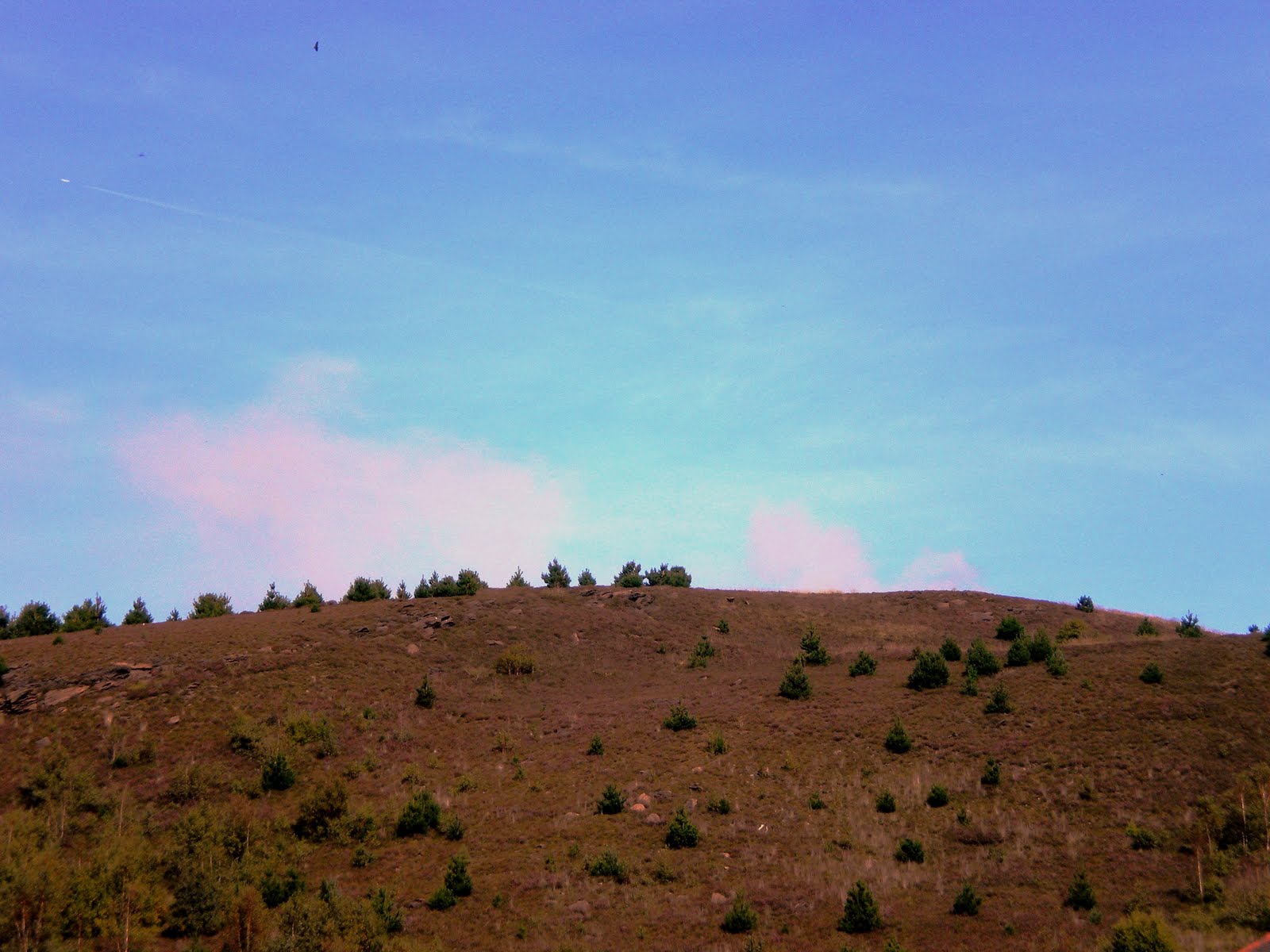
What really surprises me is the vast areas of trees and heather that have been burnt away by fire starters. It's worse than I had imagined, desolate and grim, even though there is vegetation already showing, it's a sad scene.


The mushrooms I do find are things I have either recorded or seen last week and they're all pretty dessicated from the heat but there is still the odd Amanita rubescens fruiting and also Russula ochroleuca but not in the great numbers as I had expected. When I reach the transmitters my box is empty. Though I photograph a good Tricholomoposis rutilans..


At the transmitters is a wooded area that is usually abundant in mushrooms even if it's just R ochroleuca but not this time; instead, the soil is churned up by what looks like horses, which come this way occasionally and indeed the ground is a carpet of dung piles. On the positive side I hope that some fungi will take advantage of the situation.
I carry on into the wood and eventually I find a couple of things that I can't identify first hand. Indeed one is a mushroom I've never seen before. So I collect a couple to look at later. There are a handful of Paxillus involutus/Brown Rollrim scattered about.
I also find a couple of slime moulds. One is Fuligo septica, below..

I'm not sure what the other is however

Passing the transmitters and taking the path that runs along the edge of the trees there is still a lovely view if nothing else mushroom wise.

Continuing down, the damage to the soil is constant with large swathes churned up by what can only be by machines, possibly motorbikes and I notice more broken or burnt trees. I get back onto the main road to and from the transmitters and it's here that I find Pluteus cervinus/Deer Shield, living on a hill of wood chippings.

I've seen this mushroom here before and Kilvey has quite a lot of woodchip hills dotted about but this is the first year I have seen them in numbers.

In the front is Pluteus cervinus, behind is a Russula ochroleuca.

The amount of R. ochroleuca is greater here but still sporadic. It's not until I get to the bottom of the road, before I swing a left and walk back into the woods that I find some Suillus grevillei/Larch bolete and another mushroom I can't identify, but take some for examination later.

Apart from seeing a pair of green woodpeckers, the rest of the walk offers nothing and I zigzag across paths to cover as much area as I can. I do find a few Suillus luteus/Slippery Jack but they are young and I leave them. I may come back to check on their progress later.
The only other thing that catches my eye is the burnt remains of a sculpture. There are quite a few wood sculptures here. Sadly this is just another victim of vandalism that strikes the hill every summer, every year.


Kilvey Hill. 01-9-10
Tricholomoposis rutilans/Plums and Custard
Russula ochroleuca/Ochre Brittlegill
Suillus luteus/Slippery Jack
Suillus grevillei/Larch bolete
Pluteus cervinus/Deer Shield
Amanita rubescens/The Blusher
Hypholoma fasciculare/Sulpher Tuft
Paxillus involutus/Brown Rollrim
Hygrophoropsis aurantiaca/False Chanterelle

Tuesday, 31 August 2010

Two Tricholomas

There's a part of Kilvey in walking distance that I go to often that seems very rich in fungi because I keep finding species there. This year I have discovered two new species I have not encountered before. It's not a large area, not much bigger than my back garden and even though it's not off the beaten track, I think because it's out of the way and sheltered from people it has thrived.
Both are tricholomas. I identified this as Tricholoma sejunctum/Deceiving Knight. This was found on 8/8/10
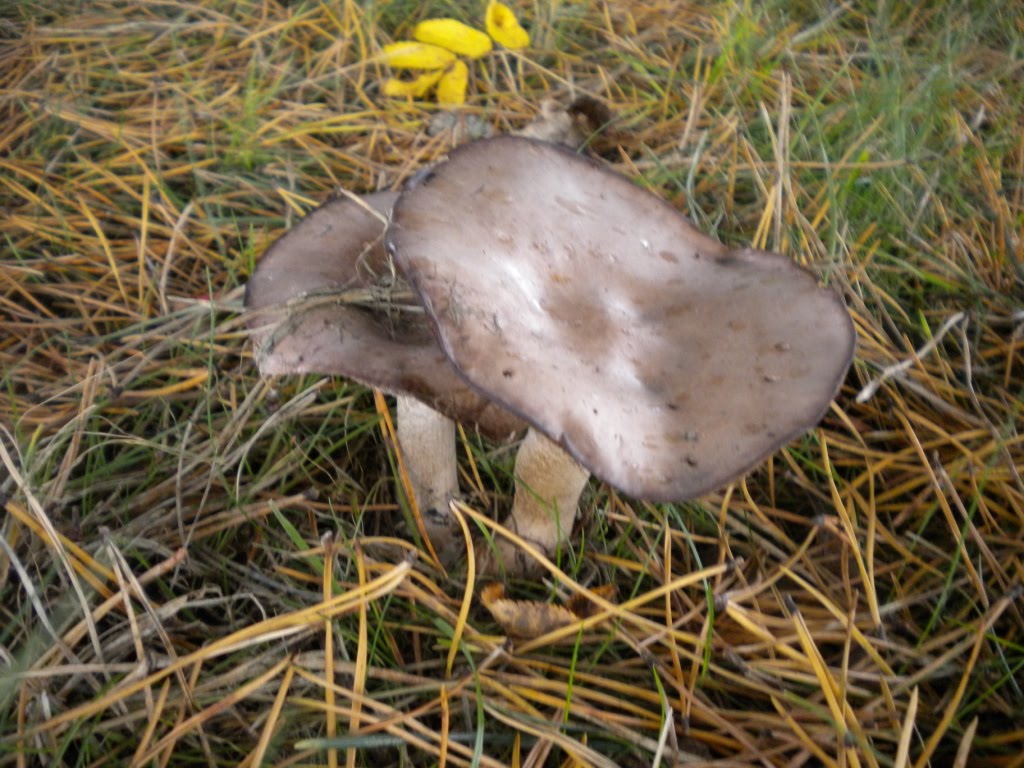

The second is possibly Tricholoma columbetta found on 22/8/10.

Quick Kilvey Foray


Even though I have a bit of a cold I go up Kilvey for a quick look around.
From where I am, I can see smoke coming from somewhere near the summit so some one has set fire to the trees again. The damage already done has been pretty bad this year and it's a depressing sight to see. It also makes me angry and I'm in two minds about going up but go anyway because while I'm not concerned by the fire I don't fancy encountering the people who may have started it.


On the way there I find a few Leccinum scabrum/Birch Boletes still fruiting. This year they have been few in numbers but constant, for two months at least and also quite large.


Starting at the Pentre-chwych rd entrance I take a right over the stream to go up to the top. The soil and leaf litter's very dry and parched and I come across nothing for quite sometime until half way up. Already the damage done by burning trees is apparent.

There is the odd Russula ochroleuca but I expect if I went to the transmitters I would find dozens as they carpet the hill for a few months.


There is another Russula here. It looks like Russula emetica/the Sickener and there a quite a few all closely together, in stages of fruiting and condition: the hot weather and slugs have taken their toll on some specimens. I take two to identify later.


There are couple of other things; Tricolomopsis rutilans and Suillus grevillei.
The smoke from the fires above wafts down so I decide to call it a day but have a quick look on the opposite side of pentre-chwyth road where there are still Russula betularum and Paxillus involutus about. These two fungi have been fruiting constantly for the last two months in great numbers.

Kilvey Hill. 31-8-10
Tricolomoposis rutilans/Plums and Custard
Russula ochreleuca/Ochre brittlegill
Russula emetica/The Sickener
Suillus grevellei/Larch bolete
Leccinum scabrum/Birch bolete
Russula betularum/Birch Brittlegill
Paxillus involutus/Brown Rollrim

Monday, 9 August 2010

Today


Spent a few hours identifying two fungi that I personally found hard to identify. It's either because of the appearance, so many grey, nondescript species, etc, or strangeness. Some types of fungi are rare or just do not fruit often.
There are common species that don't fruit every year or very little. Even Amanita muscaria, which is well known, may not fruit in numbers every year. I wonder why.
The problem with field identification for an amateur like myself is the time it takes. It's a labour of love. My advice; take your time..

Below is, I hesitate to say, is what I think is Tricholoma sejunctum/Deceiving Knight


And this is Psathyrella candolleana/Pale Brittlestem

New year

Above is Amanita rubescens, which is always the first of the Amanita family that appear.

Below is an earthball that's growing in my back yard. I was excited to see it since I throw all the species I find into in my garden, backyard to be eaten by insects. Will identify it later.


It's been ages since my last blog, apologies, lots going on..At least I'm back

Tuesday, 17 November 2009

Quick Foray

I decided to go for a quick foray over Kilvey Hill. Last week I found Amanita muscaria/Fly Agarics and I wanted to see if any more had come and they had in great numbers. There was a Amanita rubescens/Blusher too but only one.

There was a great deal of Tricholompsis rutilans/Plums and Custard growing on conifer stumps, more than I've ever seen before. Near by was a bolete I couldn't identify at the time that turned out to be Boletus badius, the Bay Bolete.
In Jersey Park was lactarius, armillaria, and Lepista nuda/Field Blewit.


Below: Tricholomoposis rutilans/Plums and Custard


Below: Boletus badius/Bay Bolete

Below: Armillaria borealis/Honey Fungus


Below: Unidentified Lactarius/Milkcap


Below: Lepista Nuda/Wood Blewit